Video marketing is now essential for brand growth, visibility and SEO performance. Brands compete for attention every single day, with audiences moving quickly across every platform. Messages slip by unnoticed, which creates a real challenge for any business that wants to stand out.
A clear and thoughtful video marketing approach solves that problem. Video marketing has fast become a key component of successful marketing strategies, with video streaming projected to account for 91% of global internet traffic in 2025.
A well-planned video marketing strategy helps your brand feel more human, more memorable and more trustworthy. It captures attention, encourages engagement and helps you boost SEO without relying on guesswork.
Here at Pod Digital, we’d like to share how video strengthens your brand and supports long-term growth.
How Does Video Marketing Build Brand Trust?
People connect faster when they see real faces. Video shows your tone, personality and values in a way text cannot achieve. This creates trust much earlier in the user journey.
Your viewers understand your brand when they see your energy and your style on camera. This connection helps them feel closer to your business before they even speak to you.
Useful trust-building formats include:
- Team introductions
- Customer success stories
- Behind-the-scenes footage
- Short walkthroughs or demos
Every video shapes your identity. Consistency builds familiarity, and familiarity builds trust.
Want your brand to feel more human on camera? Our team can help you create videos that build trust from the first second.
What Makes a Great Video Marketing Strategy?
A successful video marketing strategy begins with clear goals and a solid understanding of your audience. You need messaging that feels intentional and supports a single direction. Without this, content can feel scattered and unfocused.
Start by defining one main objective. You may want more visibility, better leads or stronger conversions. Once this goal is fixed, it becomes easier to make creative choices that support it.
A strong strategy includes:
- A clear message
- A defined audience
- Recognisable formats
- A realistic distribution plan (choosing platforms and setting posting schedules wisely).
- A system for measuring results
Good planning ensures your videos work harder for your brand. If you want a video strategy built around real goals, not guesswork, we can map it out with you.
Short-Form vs Long-Form Video: What will work in 2026?
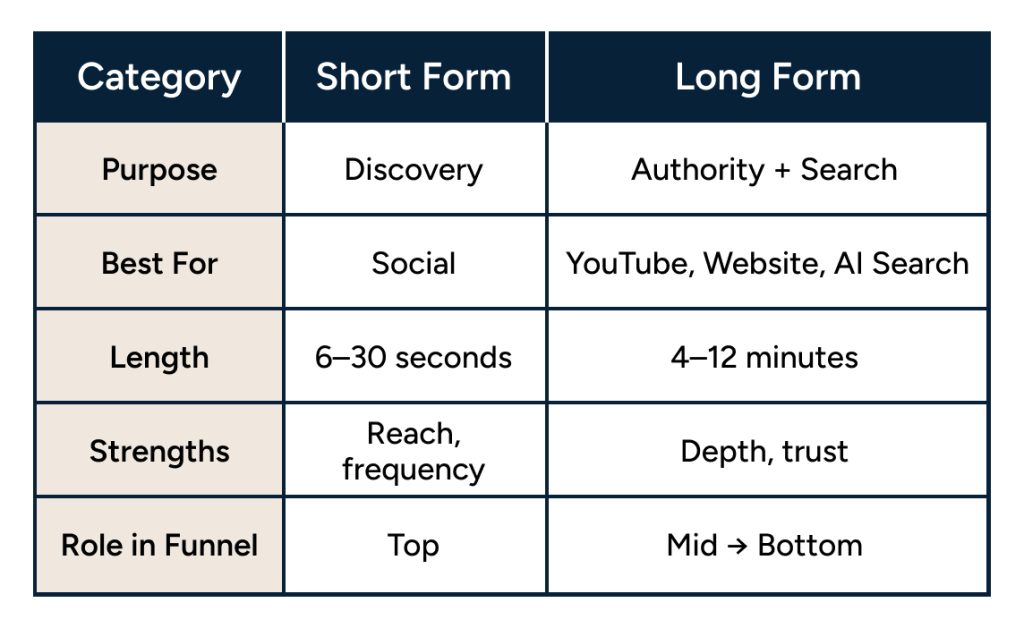
The video landscape is starting to change. Shortform vs long form video is now one of the biggest considerations for brands, as short-form content once dominated, but audiences increasingly crave deeper, more substantial formats too. Understanding this balance determines whether your content gets seen, remembered and acted upon.
The Reality of Short-Form Video Right Now
Short-form video through Reels, TikToks and YouTube Shorts still generates massive reach and engagement. The format succeeds because algorithms reward frequency and freshness. Users scroll until something captures attention, and mobile-first consumption remains the default for most audiences under 45.
However, viewer fatigue has become noticeable. People increasingly save longer videos for later viewing, return to YouTube for proper searches. They spend more time with four to ten-minute explainers than with rapid fifteen-second clips. Platforms have responded. TikTok now actively promotes three to ten-minute videos, whilst YouTube Shorts recommends creators’ longer content when short videos perform well.
Why Long-Form Video Is Growing Again
People watch long content when it solves a problem, teaches something valuable, tells a compelling story or feels genuinely human rather than over-produced. The new sweet spot for brands sits between four and twelve minutes.
This length allows you to build genuine authority and demonstrate expertise thoroughly. You need to create content that viewers actively search for rather than stumble across. Long-form video serves high-intent audiences who have moved past casual browsing and want real answers.
How Each Format Supports Your Goals
Short-form video drives reach, discovery, personality and brand recall. Use it for social growth, repeated touchpoints and filling the top of your funnel.
Long-form video builds search visibility, AI discoverability and trust. Use it for ranking in search queries, educating buyers, establishing thought leadership and converting high-intent viewers.
The most effective approach combines both formats, but starts with long-form content. Create a substantial video first, then extract shorter clips that drive discovery and bring viewers back to the complete piece. Short-form should extend your long-form content, never replace it.
How Can Video Boost SEO?
Search engines favour helpful and engaging content. Video encourages visitors to stay longer on a page, which signals value to Google. This improves ranking and helps you boost SEO in a natural, sustainable way.
What are Technical SEO Video Essentials
Search engines and AI tools need clear signals to understand and surface your videos. Technical video SEO ensures every asset you create works harder for your brand and continues to boost SEO over time. Focus on making each video easy to crawl, watch and understand for both humans and machines.
Start by giving each important video its own page on your website,
- a descriptive URL
- strong title
- natural keywords
- short supporting article or transcript
- VideoObject schema
- description and upload date
- optimise hosting and loading speeds.
Next, structure your content for discoverability.
- Use chapters or timestamps on platforms like YouTube to highlight “key moments”, making it easier for viewers to jump to the part they need.
- Write concise, benefit-led descriptions that include relevant entities, phrases and FAQs your audience would actually search for.
- Finally, keep your thumbnails, captions and tags consistent with your wider video marketing strategy.
What Types Of Videos Drive Real SEO Results?
Each video format serves a different purpose, so the content must support your wider goals:
- Short social clips increase awareness and introduce your personality.
- Explainer videos help people understand your offer much faster.
- Testimonials build trust at key moments.
- Demos remove barriers to purchase.
- Educational series also positions your team as experts.
Choose a mix that aligns with your video marketing strategy and guides viewers from discovery to action.
What Can We Expect in Video Marketing in 2026?
At Pod Digital, we see the video landscape in 2026 defined by the powerful convergence of AI and an increased demand for authentic human connection. For brands looking to drive real results, our strategy focuses on equipping you to work smarter, not just harder.
Mastering Generative Engine Optimisation (GEO): Search engines and conversational AI tools increasingly extract information and display videos as primary answers. This means we are shifting our focus to Generative Engine Optimisation. We know it will be essential to create “AI-friendly” videos. This will involve clear transcripts and chapters. Robust schema markup is no longer an optional extra but a mandatory element to ensure AI correctly interprets and surfaces our clients’ content.
The Rise of Authentic and Shoppable Content: As synthetic, AI-generated content becomes common, we believe the value of genuine, human-led video skyrockets. Our strategy will prioritise transparency, expert commentary, and real-life stories from your team.
Simultaneously, we will integrate video as a direct-action channel. We will utilise interactive and shoppable elements that allow your viewers to click and purchase products instantly. It will remove friction from the path to conversion.
Before you can get the most from these 2026 trends, you need to understand where your videos will work hardest. The right platforms shape how people discover, watch and act on your content.
Where Is the Best Place to Publish Your Marketing Videos?
Publishing matters as much as production.
- YouTube helps you capture search traffic.
- Instagram and TikTok highlight brand personality.
- LinkedIn builds authority.
- Your website boosts engagement and helps you boost SEO.
- Email keeps viewers connected with useful updates.
Each platform serves a purpose, so place your content where it can perform best by reaching your audience.
How Do You Measure Success In Video Marketing?
True success goes beyond view counts. Views alone do not reveal impact. You want to understand how people interact with your content and how that behaviour supports your goals.
Track metrics such as watch-time, retention, click-through rate, conversions and social engagement. These are the numbers that reveal what works and what needs refinement. Strong data leads to stronger decisions.
Why Should Your Brand Invest In Video Marketing Right Now?
Video reduces friction in the customer journey. It explains ideas clearly, demonstrates value and helps people trust your brand faster. A well-executed video marketing strategy supports every stage of your funnel and continues to boost SEO long after release.
When video marketing becomes part of your brand identity, you gain visibility, credibility and long-term growth.
Ready To Level Up Your Video Marketing?
Over a third (37%) of businesses that don’t use video marketing said it’s because they don’t know where to start (Wyzowl).
If you want video that feels natural, performs well and supports a stronger digital presence, Pod Digital is ready to help. We’ll help you create long-form and short-form content engineered for SEO, AI search and build your brand trust with a complete video marketing strategy.
Explore our work and contact us today to start your next project.